
Imagine waking up to find that the ocean, the very source of your life and income, has turned against you. For generations, the ocean has provided for the coastal families of Kerala. It paid for their food, their children’s education, and their homes. On May 24, 2025, that reality was completely shattered.
The container vessel MSC ELSA 3 sank just under 15 nautical miles (approximately 27 kilometres) off the Kerala coast. It was carrying over six hundred large containers filled with dangerous chemicals, heavy fuel, and billions of tiny plastic pieces. When the ship capsized, it did not just spill cargo. It spilled a wave of financial ruin and emotional distress that is still crushing local fishing communities today.
Greenpeace India recently released a detailed report titled Wrecked Futures: The Hidden Socio Economic Burden of the MSC ELSA 3 Disaster. This report was created alongside the Karumkulam Grama Panchayat and local community groups. It looks closely at Pulluvila village in Thiruvananthapuram, which is one of the worst affected areas. The findings are deeply troubling. Families who were already struggling to make ends meet have now been pushed into extreme debt.
When you look at the beautiful coast of Kerala today, you might not immediately see the pain hidden beneath the waves. The fishers cannot ignore it. Their nets are torn, their savings are gone, and their futures are uncertain. This blog post explores the details of the report to show you exactly how a single maritime disaster has disrupted thousands of lives.
Table of Contents
What Was Inside the Sunken Vessel
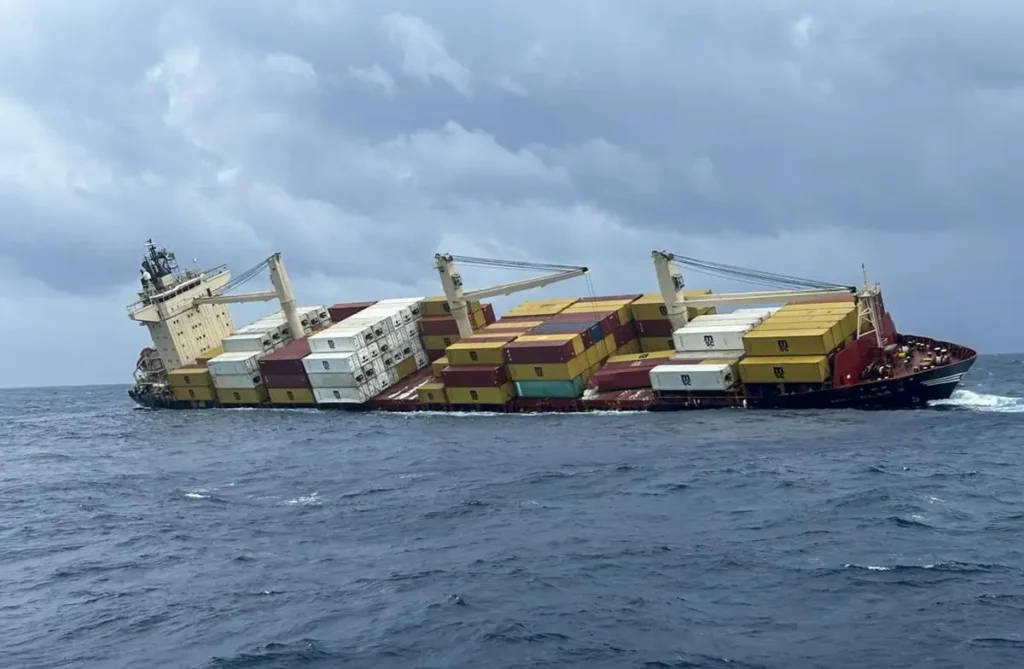
To understand why this disaster caused so much damage, you need to know what the MSC ELSA 3 was carrying. This was not an ordinary cargo ship. It was a floating warehouse of hazardous materials. When it went down, it released a toxic mix directly into the marine environment.
The Dangerous Chemical Cargo
The vessel was carrying twelve containers of calcium carbide. When calcium carbide mixes with seawater, it creates a chemical reaction that produces acetylene gas, which is highly flammable and dangerous. The ship also carried toxic hydrazine, sulphur, and various chemical additives used for making rubber. These are not substances that belong in the water where your food is caught.
Fuel Oil and Plastic Pollution
Aside from industrial chemicals, the ship held more than four hundred and fifty metric tonnes of heavy fuel oils. This thick oil leaked into the water, coating the marine habitat. Even worse for the long term safety of the coast was the presence of billions of microplastic nurdles. These are tiny plastic pellets used to manufacture plastic products. They are small, light, and almost impossible to clean up completely once they spread out into the wild.
The Ecological Toll on the Coastline
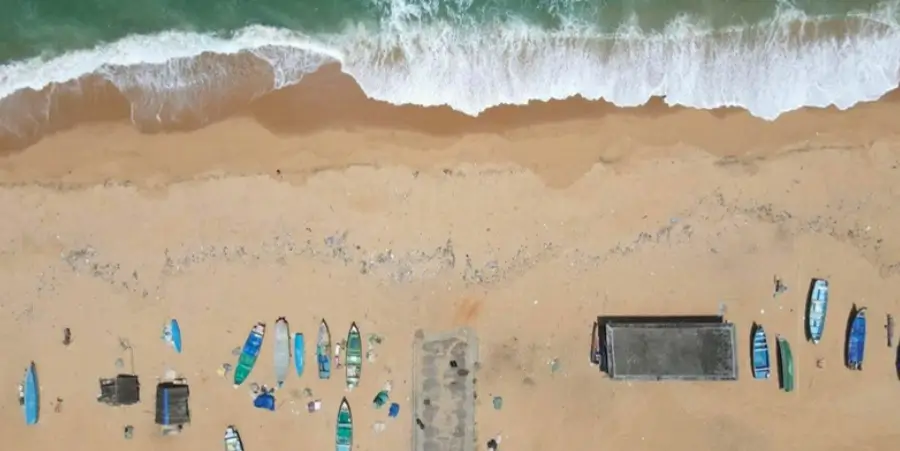
The immediate physical impact of the shipwreck was visible along a massive stretch of the coastline. The pollutants did not stay in one place. The ocean currents quickly carried the debris, oil, and plastic pellets across a hundred and twenty kilometer stretch of the Kerala coast.
How Nurdles Destroyed the Ecosystem
The plastic nurdles caused widespread environmental destruction. Because they look like small fish eggs, marine animals and fish eat them by mistake. This fills their stomachs with plastic, leading to starvation and death. The nurdles also wash up on the sandy beaches, mixing with the soil and staying there for decades or even centuries. You can see how this ruins the natural balance of the local ecosystem.
The Disappearance of Fish Colonies
Fish are highly sensitive to changes in their environment. When the chemicals and fuel leaked from the MSC ELSA 3, the underwater world became toxic. Entire fish populations moved away from the area in search of cleaner water. The regular feeding and breeding grounds of local marine life were completely ruined. For the fishers who rely on catching these fish close to the shore, this meant the ocean suddenly became an empty desert.
Livelihood Collapse for Small Scale Fishers
The environmental damage translated directly into a financial disaster for the people living in Pulluvila village and other coastal wards. Small scale fishers do not use massive commercial trawlers. They use small boats and traditional nets, staying closer to the shore. They depend entirely on what they can catch each day.
Ruined Nets and Damaged Boats
When fishers cast their nets into the polluted water, they did not bring up fish. Instead, their nets came up filled with heavy debris, thick oil, and thousands of plastic nurdles tangled in the mesh.
The weight of the debris and the sticky nature of the chemicals completely ruined the fishing gear. A fishing net is an expensive piece of equipment, often costing tens of thousands of rupees, while larger commercial nets can cost more than ₹1 lakh to replace. When a net is torn or coated in toxic chemicals, it cannot be used again. Many fishers saw their main tools of trade destroyed in a matter of days.
The Collapse of Market Confidence
Even when fishers managed to travel further out and catch some fish, they faced a new problem on land. Rumors and news about the toxic chemical spill spread fast. Customers in the local markets became terrified that the fish caught in Kerala waters were poisoned by hydrazine or calcium carbide. Market confidence collapsed completely. People stopped buying seafood. The prices of fish dropped to almost nothing, meaning that the little fish that was caught could not be sold for a profit.
The Burden on Women Fish Vendors
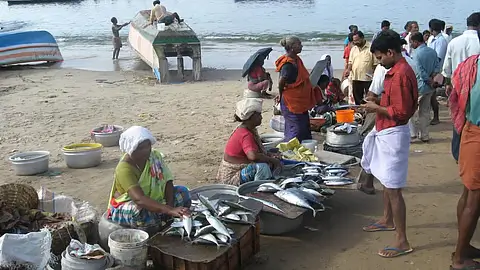
When discussing fishing communities, people often forget about the women. In Kerala, women play a massive role in the local economy as fish vendors. They buy the catch from the boats early in the morning and sell it in local markets or carry it on their heads to sell door to door.
No Fish to Sell
Because the boats were coming back empty or staying docked, the women fish vendors had no products to buy. Without fish, their daily work came to an immediate halt. They could not earn the daily wages that their families depend on to buy groceries and manage household expenses.
Loss of Financial Independence
For many of these women, vending fish was their only way to maintain financial independence and contribute to the family income. The disaster stripped them of their dignity and their ability to work. They went from being proud business owners to individuals who had to beg for credit at local grocery stores just to feed their children.
Recommended Read: Iran Claims Strike on U.S. Fifth Fleet: What is Really Happening in the Gulf?
The Rising Tide of Household Debt
With no money coming in from fishing or vending, coastal households quickly ran out of options. The Greenpeace India report highlights how the lack of immediate income forced families into a dangerous cycle of debt.
Turning to Informal Lenders
Traditional banks require paperwork, collateral, and a long time to approve loans. The fishers needed money immediately to buy food. This forced many households to turn to informal moneylenders who charge extremely high interest rates. When you are desperate to feed your family, you do not think about the long term impact of a high interest loan. You take the money just to survive the week.
The Cost of Survival
The debt accumulated quickly. Families had to borrow money for basic daily meals, medical emergencies, and essential household utility bills. Because they had no income to pay back the original loans, the interest kept growing. Within weeks of the shipwreck, households were trapped in a deep financial hole that will take years to climb out of.
Families Pushed to the Brink
The socio economic burden of the disaster goes far beyond numbers on a balance sheet. It has affected the very fabric of daily life in places like the Karumkulam Grama Panchayat. The testimonies collected in the report reveal deep human suffering.
Skipping Meals and Medical Care
When funds are low, families have to make tough choices. Many households surveyed for the report admitted that they have cut down on the quality and quantity of their meals. Skipping meals has become a common way to save money. Furthermore, elderly family members are going without necessary medicines because the family must choose between buying rice or buying healthcare.
Cleanup Operations and Ongoing Challenges
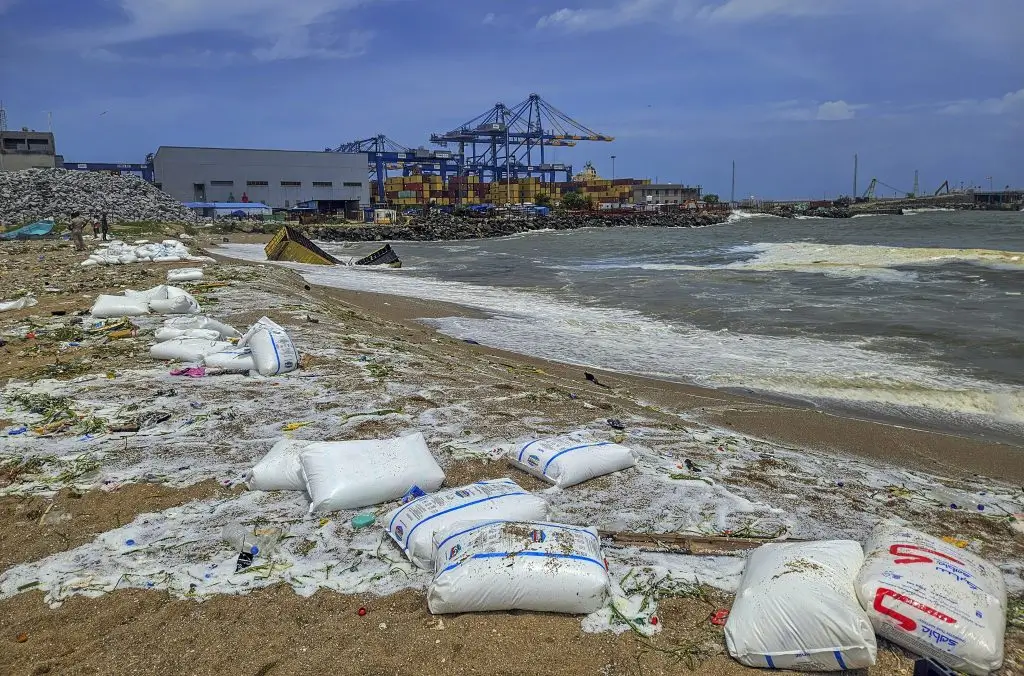
Cleaning up a maritime disaster of this scale is a massive task. It requires multiple agencies, specialized equipment, and a lot of time. While operations began quickly, the natural elements did not make it easy.
Unlike ships carrying a single type of cargo, container ships often transport a diverse mix of goods. When containers are lost or damaged, this variety can significantly complicate cleanup efforts.
The Role of Salvage Teams and Volunteers
An organization called T and T Salvage was brought in to plug the underwater leaks on the ship and retrieve the sunken containers from the seabed. At the same time, the Indian Coast Guard worked alongside local volunteers to clean the beaches. They managed to remove over eighteen hundred metric tonnes of plastic nurdles and debris from the shore. This shows how hard the local community worked to save their environment.
The Impact of the Monsoon
Unfortunately, nature complicated the cleanup. The arrival of the heavy monsoon rains brought rough seas and strong waves. The churning water buried the plastic nurdles deep under layers of sand and mud along the beach. This made it impossible for volunteers to scoop them up.
Even though huge amounts of waste were removed, a lot of pollution remains trapped in the coastal environment, requiring long term monitoring by scientific bodies like the Centre for Marine Living Resources and Ecology.
Legal Actions and the Fight for Accountability
The Kerala state government recognized the severity of the disaster and decided to take legal action against the owners of the Liberian flagged vessel. They chose not to let the shipping company walk away from the mess.
Securing the Bank Guarantee
The state government filed a historic admiralty suit to demand compensation for both environmental destruction and economic losses. To make sure the shipping line, MSC, would pay, authorities actually arrested a sister vessel belonging to the same company that was in local waters.
This aggressive legal move forced the company to provide a ₹1,227.62-crore bank guarantee. This money is meant to cover the cost of the cleanup and provide relief to the affected communities.
The Need to Close Regulatory Loopholes
While the legal actions are a step in the right direction, Greenpeace India points out that this disaster exposed massive gaps in maritime regulations. The rules regarding how hazardous cargo is monitored and how marine pollution is handled need to be updated. Shipping companies must be held to higher standards so that a similar accident does not happen again in the future.
Recommended Read: Global Conflicts in 2026: How the Middle East War Is Driving the Red Sea Crisis and Impacting Global Shipping
What the Communities Are Demanding
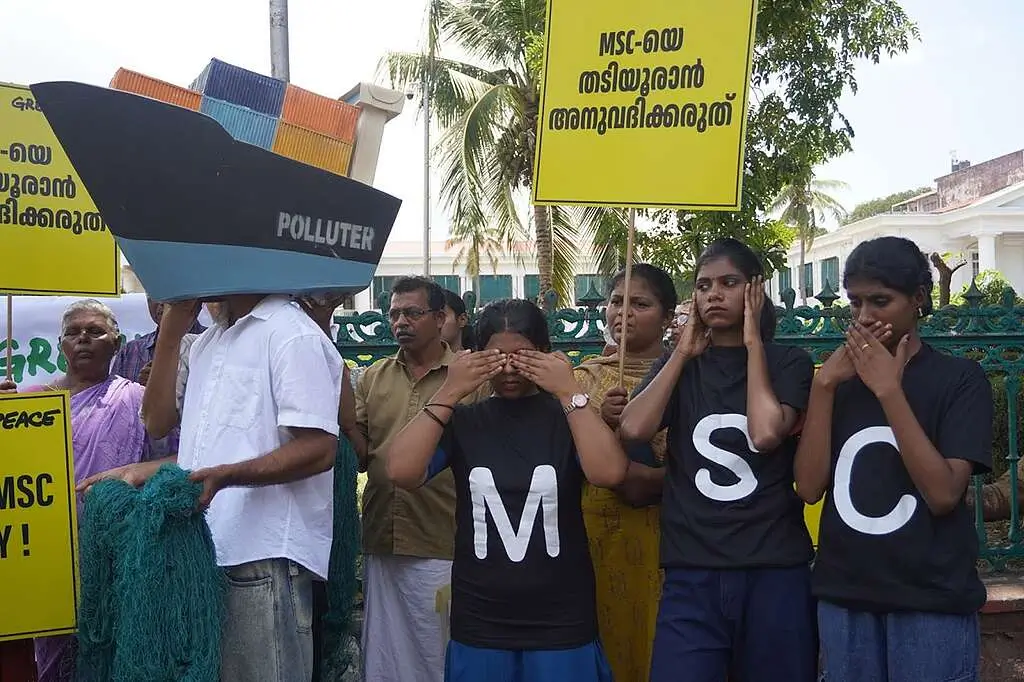
The money from the bank guarantee is caught up in legal processes, but the fishers need help right now. The report outlines clear demands from the affected communities that must be addressed immediately by the government.
- Immediate Interim Relief: Families need direct cash assistance to buy food, pay for healthcare, and keep their children in school while the ocean recovers.
- Subsidies for Repairs: Fishers need financial help to replace their ruined nets, repair their boat engines, and patch up their gear without taking on more high interest debt.
- Debt Relief Support: The government must step in to help manage or freeze the debts that families accumulated from informal moneylenders due to the disaster.
- Decentralized Compensation Systems: The process for filing compensation claims must be simplified and handled at the local panchayat level so that ordinary fishers can access it easily.
The Challenge of Proving Loss
One of the biggest hurdles for local fishers is the bureaucratic process of proving their losses to get compensation. The current legal systems are not designed for small scale workers.
The Problem of Documentation
When a large business suffers a loss, they have receipts, insurance policies, and accounting books to prove it. A traditional fisher does not have these things. Their only evidence is a torn net, an oil stained boat, or an empty fish basket. They do not have paperwork to prove how much money they would have made on a normal Tuesday in June.
Making Claims Accessible
If the compensation process requires complex legal forms and expensive lawyers, the poorest families will get nothing. The government needs to set up transparent systems right in the villages. Local leaders who know the fishers should be allowed to verify the damage so that the relief money reaches the hands of the people who actually suffered.
The Potential Risk of Corruption
To make matters worse, there is a real fear of corruption. When large relief funds are announced, dishonest middlemen or officials often try to take a cut. Because these fishers lack official paperwork, they are easy targets. Families worry they will have to pay bribes just to get their claims processed, or that the money will go to well-connected people who weren’t even affected.
A Call for Climate and Social Justice
The story of the MSC ELSA 3 disaster is not just an environmental report. It is a story about human rights and social justice. The people who did nothing to cause this pollution are the ones paying the highest price for it.
Big Corporations Versus Small Communities
On one side, you have a massive international shipping company that moves goods across the globe for profit. On the other side, you have traditional fishers who live a simple life and protect the ocean. When the corporation makes a mistake, their corporate profits might take a small hit, but their lives remain safe. For the fishers, a mistake means losing their meals and their homes. This imbalance shows why strict accountability is necessary.
Listening to Coastal Voices
For too long, the voices of coastal communities have been ignored during major policy decisions. The Wrecked Futures report aims to change that. It brings the testimonies of the residents of Pulluvila directly into the spotlight. You cannot solve a maritime crisis by only talking to lawyers and scientists in clean offices. You must listen to the people who have salt on their skin and empty pockets because of the pollution.
Looking Forward: Rebuilding the Coast
Rebuilding the lives of the Kerala fishers will not happen overnight. The chemicals will eventually dissipate, and the fish will slowly return, but the financial and psychological scars will remain for a long time.
The Path to Recovery
Recovery requires a long term commitment from the government, environmental groups, and civil society. It means checking the safety of the seafood regularly to rebuild consumer trust. It means offering training and support so that fishing families have alternative ways to earn money when the sea is unsafe. Most importantly, it means ensuring that the ₹1,227.62 crore guarantee is distributed fairly and quickly to those who need it most.
Your Role as a Reader
As a reader, you can help by keeping this conversation alive. Share the findings of the Greenpeace India report. Support local fishing communities by buying local seafood once authorities declare it safe. Understand that behind the statistics of a shipwreck, there are real people fighting for their survival. The fishers of Kerala have looked after the sea for centuries. Now, it is time for society to look after them.