
Imagine waking up, looking out over the shoreline near Mumbai, and seeing a massive, abandoned oil tanker stuck on the rocks. That is exactly what happened near Manori beach when strong monsoon weather pushed a stranded vessel out to sea and onto the shore.
The ship, named MT Al Jafzia, was not supposed to be moving at all. It was locked in a complex legal battle involving illegal fuel smuggling, international sanctions, and deserted crews. When severe weather struck, the unmanned ship broke away from its anchor and drifted right toward the coast.
Here is the complete story of how an offshore smuggling bust turned into a high stakes environmental rescue mission on the shores of Mumbai.
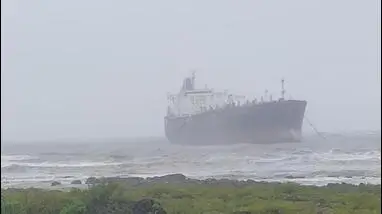
Table of Contents
From Interception to Abandonment: The Backstory
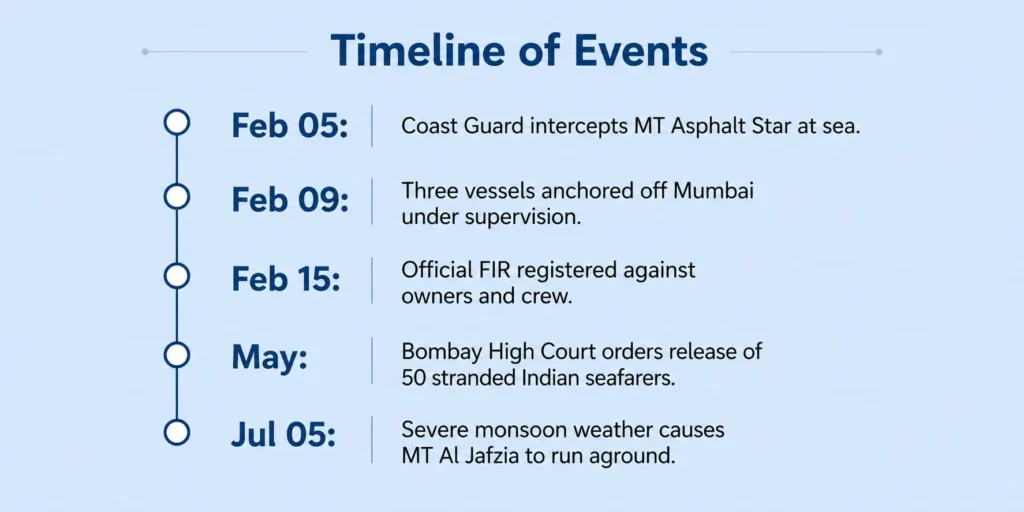
To understand how a 600 ft. vessel ran aground, you have to look back to February 5. The Indian Coast Guard carried out a coordinated sea and air operation to intercept a tanker called MT Asphalt Star in the Arabian Sea. Investigators suspected the vessel of engaging in illegal mid-sea ship-to-ship transfers of fuel and bitumen originating from Iran.
Along with MT Asphalt Star, authorities brought two other involved vessels, MT Al Jafzia and MT Stellar Ruby, into custody. By February 9, all three ships were anchored under Coast Guard supervision about 11 nautical miles (roughly 20.3 km) off the Mumbai coast. On February 15, an FIR was officially registered against the ship owners and eight other individuals under several Indian laws, including the Customs Act, Petroleum Act, Essential Commodities Act, and Bharatiya Nyaya Sanhita.
Investigations revealed that these Dubai managed ships frequently changed their identities, manipulated paper records, and disabled their Automatic Identification System (AIS) signals to dodge coastal law enforcement.
The Human Cost and the Empty Ship
As legal battles played out in the Bombay High Court, a human crisis unfolded aboard the anchored fleet. The ship owners essentially abandoned the vessels, leaving the crew without sufficient food, water, electricity, or unpaid wages.
In May, the Bombay High Court stepped in on humane grounds and ordered the immediate release and repatriation of 50 Indian seafarers stranded on board. The court also granted permission for MT Al Jafzia to be towed to the Alang ship breaking yard in Gujarat for safe custody.
However, before the ship could make that final trip, the seafarers were sent home. While rescuing the crew was necessary, it left the ships entirely unmanned. The Coast Guard warned that leaving large tankers without crews in open waters carried severe navigational, environmental, and security risks, a warning that proved accurate just a few weeks later.
The Monsoon Breakdown off Manori
On July 5, severe monsoon weather hit the coast. The heavy winds and rough sea conditions caused the three anchored ships to drag their anchors.
- MT Asphalt Star (flying a Mali flag) and MT Stellar Ruby (flying an Iranian flag) dragged their anchors and washed closer to the shore, but their crews managed to keep them secured about 11 nautical miles off Manori island.
- MT Al Jafzia (a Nicaragua flagged vessel) had no crew on board to manage the situation. The heavy seas snapped its anchor chain completely.
The unmanned 600 ft. long and 106 ft. wide vessel drifted freely until it ran aground on the rocky coastline, ending up roughly a half-mile (almost 1 km) off Manori beach. Local fishermen noticed the giant ghost ship looming near the rocks and immediately alerted the Gorai police station. Entering the rough monsoon waters to inspect a giant grounded hull was far too dangerous for small fishing boats, leaving official agencies to take over the operation.
The Environmental Race Against Time
Why does a grounded, empty ship create such a massive panic? Even if a tanker is not carrying a commercial load of crude oil, it is far from harmless.
MT Al Jafzia was caught transferring about 66,000 lbs. of heavy fuel oil during its initial bust in February, while MT Stellar Ruby held roughly 6,030 tons of bitumen. Beyond any remaining cargo, an operational tanker contains heavy engine fuel, lubricants, toxic sludge, and contaminated ballast water. If the sharp rocks off Manori puncture the hull, those fluids can leak into the sea, ruining local fishing grounds and coastal ecosystems.
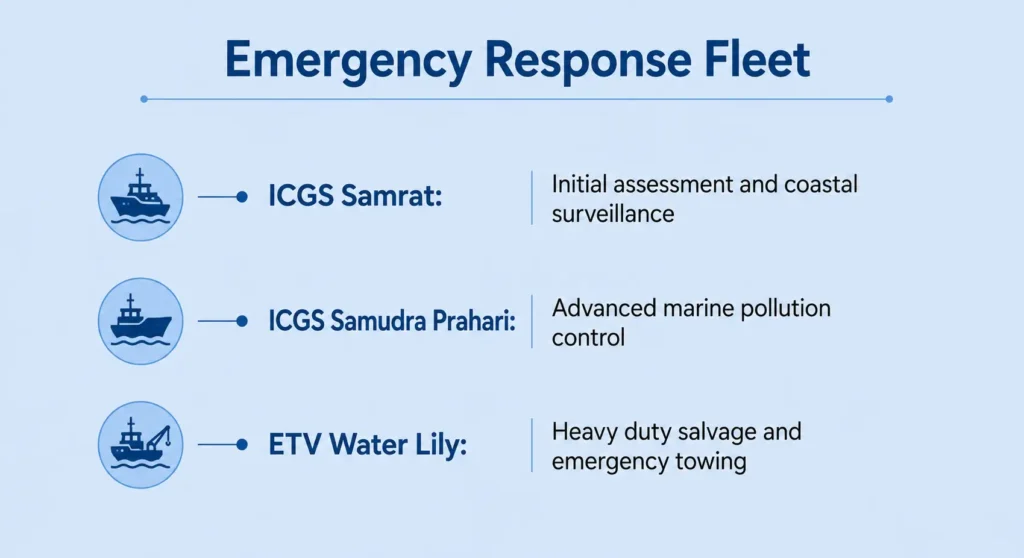
To prevent an environmental disaster, the Indian Coast Guard launched a swift emergency response:
- ICGS Samrat was diverted to assess the grounded ship and monitor the shoreline.
- ICGS Samudra Prahari, a specialized pollution control vessel, was deployed to handle potential chemical or oil spills.
- The Emergency Towing Vessel Water Lily was brought in to assist with refloating and stabilizing the vessels.
The Unseen Environmental Threat: What an Oil Leak Would Mean
If the sharp rocks off Manori had punctured the hull of MT Al Jafzia, the local environment would have faced devastating consequences. A major fuel leak in rough monsoon waters can spread toxic chemicals rapidly across the shoreline, making cleanup efforts nearly impossible.
- Devastation to Marine Life: Heavy fuel oil coats everything it touches. It smothers fish, destroys the natural waterproofing of seabird feathers, and poisons marine organisms that form the base of the ocean food chain.
- Destruction of Local Fishing Livelihoods: The fishing communities around Manori and Gorai rely on these coastal waters for their daily income. An oil slick would force a fishing ban, ruin nets, and deplete local fish populations for years.
- Toxic Coastal Pollution: Strong monsoon waves would push floating oil directly onto nearby beaches and mangrove habitats. Cleaning sticky petroleum residue off rocky shorelines and sensitive coastal ecosystems requires massive effort and causes long term damage.
The Broader Impact: Shadow Fleets and Coastal Risk
This grounding incident highlights a growing global issue known as the shadow fleet. These are older vessels, often with unclear ownership, weak insurance, and fake registration flags, used to move sanctioned oil across the globe.
MT Al Jafzia itself was built in 1999 and carries the International Maritime Organization number IMO 9171498. Under a previous name, CHIL 1, this exact same IMO number was placed on the U.S. Treasury sanctions list in April 2025 for deceptive shipping practices.
By September 2025, estimates showed that the global shadow fleet had grown to 978 tankers, accounting for nearly 18.5% of the worldwide oil tanker capacity. When these aging, under maintained ships get caught or abandoned by their owners, local governments and coastal communities are left to clean up the mess.
India’s immediate mission off Manori is to inspect the damaged hull, prevent toxic leaks, and safely refloat the vessel. But the bigger lesson is clear: impounding a rogue ship is only half the battle. Without proper maintenance, active crews, and secure mooring plans, a legal victory in court can quickly transform into a full blown environmental emergency at sea.
Frequently Asked Questions
1. What is MT Al Jafzia, and why was it anchored near Mumbai?
It is a 600 ft. long merchant tanker intercepted by the Indian Coast Guard in February for alleged involvement in illicit oil smuggling and violating international sanctions.
2. Why was there no crew on board when the ship ran aground?
The Bombay High Court ordered the release and repatriation of 50 Indian seafarers in May after the ship owners abandoned them without pay, food, or electricity.
3. Did the grounded tanker cause an oil spill off Manori beach?
No major spill was publicly reported immediately after the incident, but pollution control ships like ICGS Samudra Prahari were deployed to prevent any potential leakage of fuel oil or toxic sludge.
4. How big is the global shadow fleet today?
Industry reports estimated in September 2025 that the shadow fleet consists of 978 tankers, which makes up about 18.5% of global oil tanker capacity.
5. What happens to MT Al Jafzia next?
Specialists must inspect the hull for structural damage before using emergency towing vessels like Water Lily to refloat the ship and move it safely to a ship breaking yard.
