
Table of Contents
The oceans that surround Earth’s continents are filled with mystery, beauty, and extreme natural features. Covering more than 70% of the planet’s surface and holding nearly 1.35 billion cubic kilometres of water, the oceans are far from flat. Beneath the waves lie vast plains, towering mountains, deep valleys, and enormous trenches.
What makes the ocean even more fascinating is that many underwater features are larger and more extreme than those found on land. Oceanic mountains can be taller than land-based ranges, plains are flatter, and trenches plunge to depths far greater than any valley on Earth.
The average depth of the world’s oceans is about 3.5 kilometres, but areas deeper than 200 meters are classified as the deep sea. Some parts descend several kilometres below the surface. Scientifically, the deepest areas of the ocean are known as ocean trenches, which belong to the hadal zone the deepest and least explored region of the sea.
These trenches are formed mainly due to tectonic plate movements, where one plate slides beneath another. Currently, scientists have identified 46 hadal habitats, but much about them remains unknown because extreme pressure and darkness make exploration extremely difficult.
Below are the top 10 deepest parts of the ocean, ranked by depth.
1. Mariana Trench
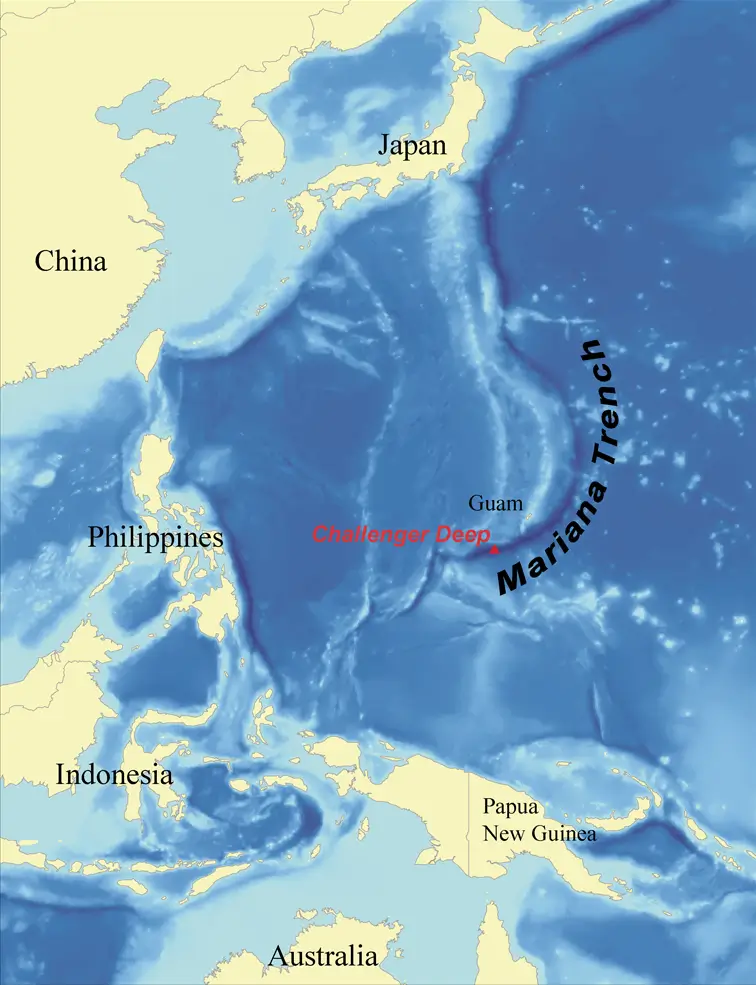
The Mariana Trench is the deepest known point on Earth, located in the western Pacific Ocean. It contains the planet’s deepest spot, known as the Challenger Deep. While thousands have climbed Mount Everest, only 27 people have descended to this extreme depth.
In 1960, Jacques Piccard and Don Walsh reached a depth of 10,916 meters aboard the Trieste bathyscaphe. Later unmanned missions recorded depths exceeding 11,000 meters. The trench stretches about 2,550 km long, averages 69 km wide, and curves toward the island of Guam.
Formed by the subduction of tectonic plates, the trench experiences enormous pressure, increasing water density by nearly 5% at the bottom. Despite the harsh environment, scientists have found life forms such as amphipods, crustaceans, flatfish, and even unknown species of snailfish.
2. Tonga Trench
Located in the southwest Pacific Ocean, the Tonga Trench is the second-deepest trench on Earth, reaching a depth of about 10,882 meters. Its deepest point, called Horizon Deep, is the deepest trench in the Southern Hemisphere.
The trench extends roughly 2,500 km from New Zealand’s North Island to Tonga and was formed by the subduction of the Pacific Plate beneath the Tonga Plate. Scientists have discovered unique organisms, including roundworms, living deep within its sediments.
3. Philippine Trench
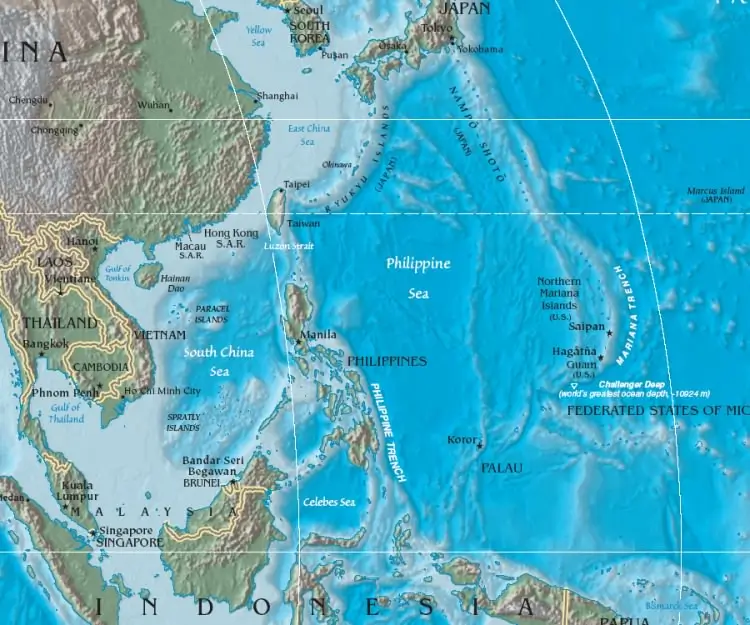
Also known as the Mindanao Trench, the Philippine Trench is the third-deepest point in the ocean, reaching about 10,540 meters at the Galathea Depth. It lies east of the Philippines and stretches 1,320 km in length.
The trench was created by the collision of the Eurasian Plate and the Philippine Plate. Scientists once believed this trench to be the deepest point on Earth before further studies of the Mariana Trench. It is estimated to be relatively young, forming around 8–9 million years ago.
4. Kuril–Kamchatka Trench
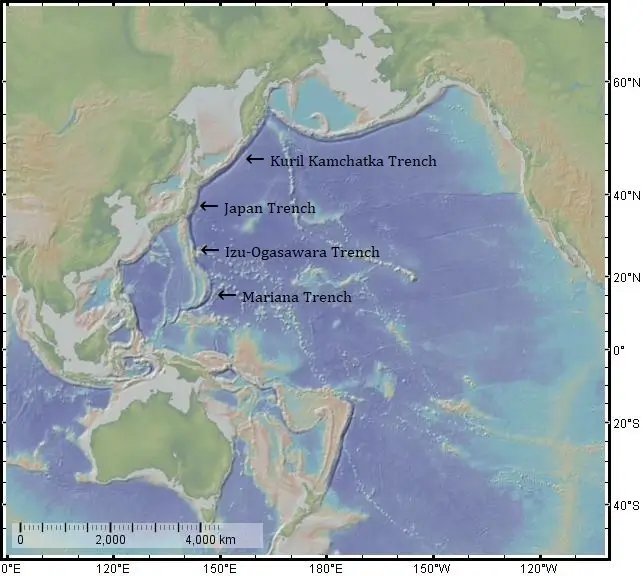
This deep trench lies in the northwest Pacific Ocean, near the Kuril Islands and Kamchatka Peninsula. It reaches depths of about 10,500 meters and is associated with intense volcanic and seismic activity.
The trench was formed during the late Cretaceous period by tectonic subduction, which also created nearby volcanic island arcs.
5. Kermadec Trench
Located in the South Pacific Ocean, the Kermadec Trench stretches about 1,000 km and reaches a maximum depth of 10,040 meters. It was formed by the subduction of the Pacific Plate beneath the Indo-Australian Plate.
The trench is part of the Kermadec–Tonga subduction system, which extends nearly 2,000 km. It is home to deep-sea species such as giant amphipods measuring up to 34 cm. In 2014, the unmanned submarine Nereus imploded here due to extreme pressure.
6. Izu–Ogasawara Trench
Also called the Izu–Bonin Trench, this trench lies in the western Pacific Ocean and reaches depths of around 9,780 meters. It stretches from Japan to the northern Mariana region and forms part of a complex trench system in the Pacific.
7. Japan Trench
The Japan Trench is located east of the Japanese islands and is part of the Pacific Ring of Fire. It reaches depths of approximately 9,000 meters and extends from the Kuril Islands to the Bonin Islands.
The trench was formed by the subduction of the Pacific Plate beneath the Okhotsk Plate and is closely linked to earthquakes and tsunamis in the region.
8. Puerto Rico Trench
The Puerto Rico Trench is the deepest point in the Atlantic Ocean, reaching about 8,640 meters at Milwaukee Deep. It stretches over 800 km and lies between the Caribbean Sea and the Atlantic Ocean.
This trench is responsible for major earthquakes and tsunamis. Exploration efforts began in the 1960s, with robotic missions continuing into recent years.
9. South Sandwich Trench
Located in the southern Atlantic Ocean, the South Sandwich Trench reaches a depth of around 8,420 meters at Meteor Deep. It runs nearly 956 km and is associated with active volcanic activity.
The trench formed due to the subduction of the South American Plate beneath the South Sandwich Plate.
10. Peru–Chile Trench
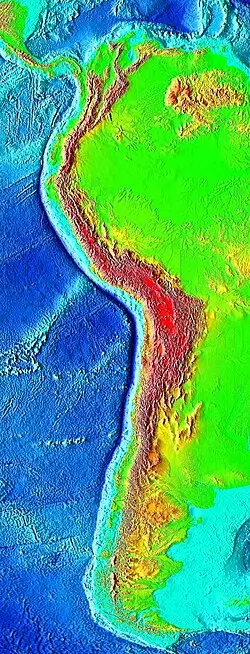
Also known as the Atacama Trench, this trench lies off the western coast of South America in the eastern Pacific Ocean. It reaches a depth of about 8,060 meters at Richards Deep.
The trench stretches nearly 5,900 km and was formed by the subduction of the Nazca Plate beneath the South American Plate.
Conclusion
The deepest parts of the ocean remain some of the least explored places on Earth. Extreme pressure, darkness, and isolation make these regions difficult to study, yet they hold vital clues about Earth’s geology, tectonic activity, and unique life forms. As technology advances, future exploration of these deep-sea trenches may reveal discoveries that reshape our understanding of the planet.
